
Kenya or Tanzania, in short
The honest headlines.
Where is the migration?
9–10 months in Tanzania, 2–3 in Kenya.
Calving season?
Tanzania only, at Ndutu in Jan–Feb.
Which is cheaper?
Kenya, generally: lower fees, shorter distances.
Fewer vehicles?
Tanzania, especially the southern circuit.
Short trip of 4–5 days?
Kenya, more wildlife per day.
Kilimanjaro?
Entirely in Tanzania.
The short answer
They share the same ecosystem and the same migration, split by a border. Broadly:
Neither is objectively better. What follows is the honest detail, written, we should say plainly, by a Tanzanian operator. We have tried to be fair.
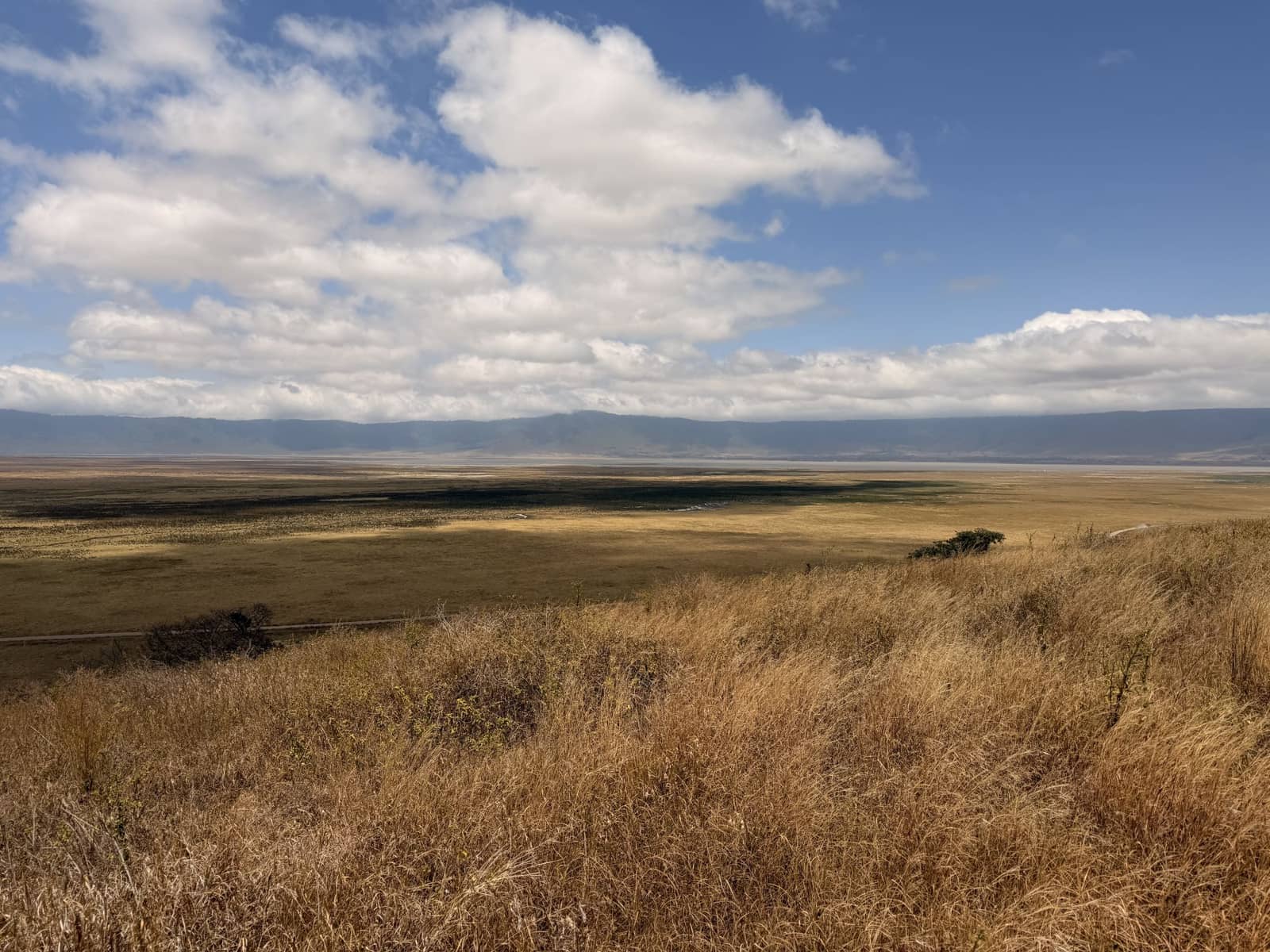
Side by side
| Factor | Tanzania | Kenya |
|---|---|---|
| Flagship park size | Serengeti 14,763 km² | Masai Mara 1,510 km² |
| Migration months | ~9–10 months a year | ~2–3 months (Jul–Oct) |
| Calving season | ✓ Ndutu, Jan–Feb | ✗ |
| River crossings | ✓ Mara & Grumeti | ✓ Mara |
| Park fees | $59–82.60/day | Generally lower |
| Overall cost | Higher | Lower |
| Vehicle density | Lower (bigger areas) | Higher in the Mara |
| Off-road driving | Prohibited | Permitted in conservancies |
| Black rhino | Ngorongoro (~60%) | Several reliable options |
| Highest mountain | Kilimanjaro 5,895 m | Mount Kenya 5,199 m |
| Beach | Zanzibar | Diani, Watamu |
| Getting around | Longer drives | Shorter drives |
The migration: who has more of it?
This is the question most people are really asking, and the answer is clearer than the marketing on either side suggests.
The herds spend roughly nine to ten months of the year in Tanzania and two to three months in Kenya's Masai Mara. The famous Mara River crossings happen on the border, and can be watched from either side between July and October.
What Tanzania has that Kenya does not: the calving season. Around 400,000 wildebeest are born at Ndutu in late January and February, and that happens nowhere else.
What Kenya has that Tanzania does not: compactness. The Mara is a tenth the size of the Serengeti, so when the herds are there, they are concentrated and easy to reach.
What the experience actually feels like
Tanzania
Bigger, emptier, and slower. Drives between parks are long (Arusha to the Serengeti is seven to eight hours), and the landscapes change dramatically as you go. Off-road driving is prohibited, so you stay on tracks and sightings are at a respectful distance. In the less visited parks you can spend a morning without seeing another vehicle.
Kenya
More compact and faster-paced. Drives are shorter, sightings come more quickly, and in the private conservancies bordering the Mara, off-road driving, night drives and walking are all permitted, which the national parks in Tanzania do not allow. The trade-off is vehicle density: a good sighting in the Mara in August can attract a crowd.
Which should you choose?
| If you… | Choose |
|---|---|
| Want the calving season | Tanzania |
| Want to climb Kilimanjaro | Tanzania |
| Want a beach afterwards | Tanzania (Zanzibar) |
| Want the Ngorongoro Crater | Tanzania |
| Have 10+ days | Tanzania |
| Have 5 days or fewer | Kenya |
| Are on a tighter budget | Kenya |
| Want night drives and off-road | Kenya conservancies |
| Want river crossings in Jul–Oct | Either |
| Want fewest other vehicles | Tanzania (southern circuit) |
Can I do both?
Yes. The Serengeti and Masai Mara are adjacent, and combined itineraries are common, usually flying between them, since the land border crossing at Isebania is slow. Note that the East Africa Tourist Visa does not cover Tanzania: you need separate visas for each country. Budget 10 to 14 days to do both properly.
Kenya vs Tanzania: frequently asked questions
Neither is objectively better. Tanzania offers greater scale and variety, the calving season, Kilimanjaro, Ngorongoro and Zanzibar. Kenya is more compact, generally cheaper, and better for short trips.
Both, but the herds spend roughly nine to ten months of the year in Tanzania and only two to three in Kenya's Masai Mara. The famous river crossings happen on the border between July and October.
Kenya, generally. Tanzanian park fees are higher ($82.60 per day in the Serengeti) and the distances are greater, which means more fuel and more days. Kenya's compactness reduces the total trip cost.
They are the same ecosystem divided by a border. The Serengeti is roughly ten times larger with more varied habitats and lower vehicle density; the Mara is compact so sightings come faster, but with more crowding in peak season.
No. Calving happens on the southern short-grass plains at Ndutu, in Tanzania, in late January and February. It is one of the clearest reasons to choose Tanzania.
Yes, and combined itineraries are common, usually flying between the Serengeti and the Mara, since the land border crossing is slow. Budget 10 to 14 days, and note you need separate visas for each country.
No. It covers Kenya, Uganda and Rwanda only. Tanzania requires its own visa, currently $50 for most nationalities.
Both deliver four of the five easily. For black rhino, Kenya has several reliable options including Ol Pejeta and Lake Nakuru, while in Tanzania the Ngorongoro Crater is essentially the only realistic place.
Tanzania, particularly the southern circuit: Ruaha, Nyerere and Mikumi see a tiny fraction of the visitors of either the Serengeti or the Mara. Even Tarangire is quiet by East African standards.
In Kenya's private conservancies, yes. In Tanzanian national parks, off-road driving is prohibited and night drives are not permitted except in Lake Manyara, Tarangire and some private concessions.
If you have a week or more and want variety, Tanzania. If you have four or five days, Kenya delivers more wildlife per day because the distances are so much shorter.
Tanzania, entirely. The famous view of Kilimanjaro rising behind elephants is often photographed from Amboseli in Kenya, but the mountain itself and every climbing route are in Tanzania.