
On This Page Jump to section
The Greatest Wildlife Spectacle on Earth
The real storyThe Great Migration is not just a wildlife event. It is the single greatest wildlife spectacle on the planet. Every year, over 1.5 million wildebeest, joined by 200,000 zebras, move in a continuous, circular pilgrimage across the Serengeti-Mara ecosystem, covering roughly 800 kilometers a year.
The Migration Route: Understanding the Cycle
Follow the herdsThe migration follows a circular route across the Serengeti-Mara ecosystem, driven entirely by rainfall and the availability of fresh grass. Understanding this route is essential for planning your safari.
Southern Serengeti (Ndutu) → January–March (Calving)
Central & Western Serengeti → April–May (Dispersal)
Western Corridor (Grumeti) → June–July (Grumeti Crossings)
Northern Serengeti (Mara River) → July–September (Mara Crossings)
Central Serengeti → October–November (Return South)
Southern Serengeti (Ndutu) → December (Pre-Calving)
Key insight: the migration is not a single herd moving together. It is a series of herds moving in different directions. Understanding the broad pattern helps you plan, but local guides can tell you exactly where the herds are at any given time.
Month-by-Month: Where, What & Why
Timing is everythingA detailed, month-by-month breakdown of the Great Migration. For each month, exactly where the herds are and what you can expect to see.
Jan
Southern Serengeti (Ndutu)
The herds arrive on the short-grass plains. Calving season begins, with predators active nearby.
Feb
Southern Serengeti (Ndutu)
Peak calving season: over 8,000 calves born every day. One of the most dramatic times to witness the cycle of life.
Mar
Central & Western Serengeti
The herds begin moving west and north as the southern plains start to dry.
Apr
Western Corridor (Grumeti)
The long rains arrive and the herds gather in the Western Corridor, setting the stage for the first crossings.
May
Western Corridor (Grumeti River)
The herds concentrate around the Grumeti River. The first dramatic crossings begin.
Jun
Western & Northern Serengeti
The herds push north towards the Mara River as the dry season begins.
Jul
Northern Serengeti (Mara River)
The herds arrive at the Mara River. The iconic crossings begin.
Aug
Northern Serengeti (Mara River)
Peak of the Mara River crossings: the busiest and most spectacular time to witness the migration.
Sep
Northern Serengeti (Mara River)
Crossings continue with slightly fewer crowds. Wildlife viewing remains exceptional.
Oct
Northern & Central Serengeti
The herds begin their journey south. Good value with thinning crowds.
Nov
Central & Southern Serengeti
The short rains begin and the herds return to the southern plains, preparing for the next calving season.
Dec
Southern Serengeti (Ndutu)
The herds settle on the southern plains, grazing on nutrient-rich grass as the cycle starts again.
Trusted Migration Packages: Book With Confidence
Pick your adventureTimed to the migration phase you want to see, every package below is built with complete transparency and no hidden fees. Every package includes:
- Professional driver-guide, fluent in English
- Modern 4×4 safari vehicle with pop-up roof
- Park entry fees and conservation levies
- Accommodation as specified: camping, tented camp or lodge
- Full board meals and drinking water
- 24/7 support and free cancellation up to 14 days before departure
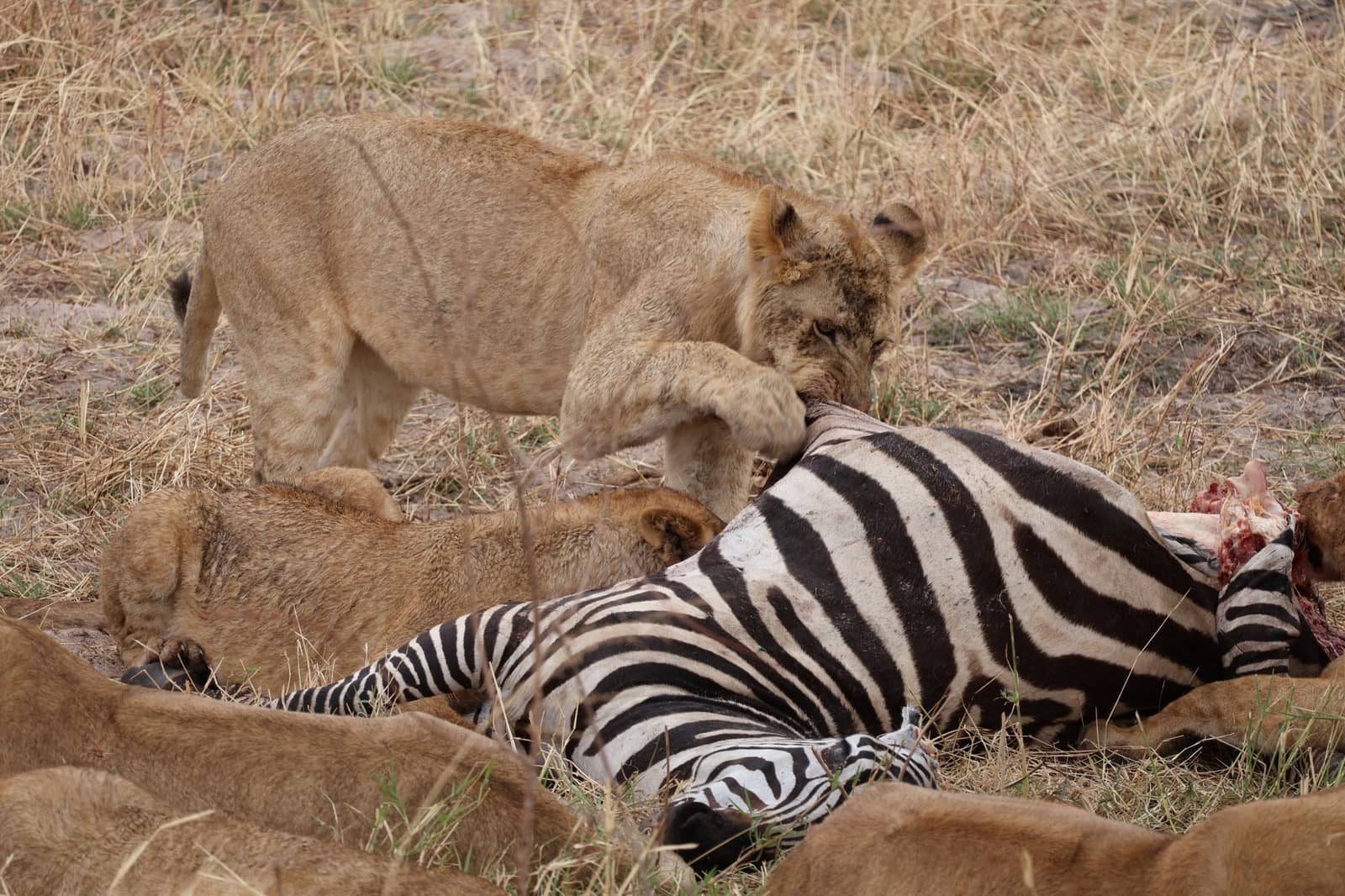
Calving Season Safari
- Peak wildebeest calving in February
- Lions, cheetahs and hyenas near the herds
- 5 real itinerary options, 4 to 6 days
- Fly-in options from Zanzibar available
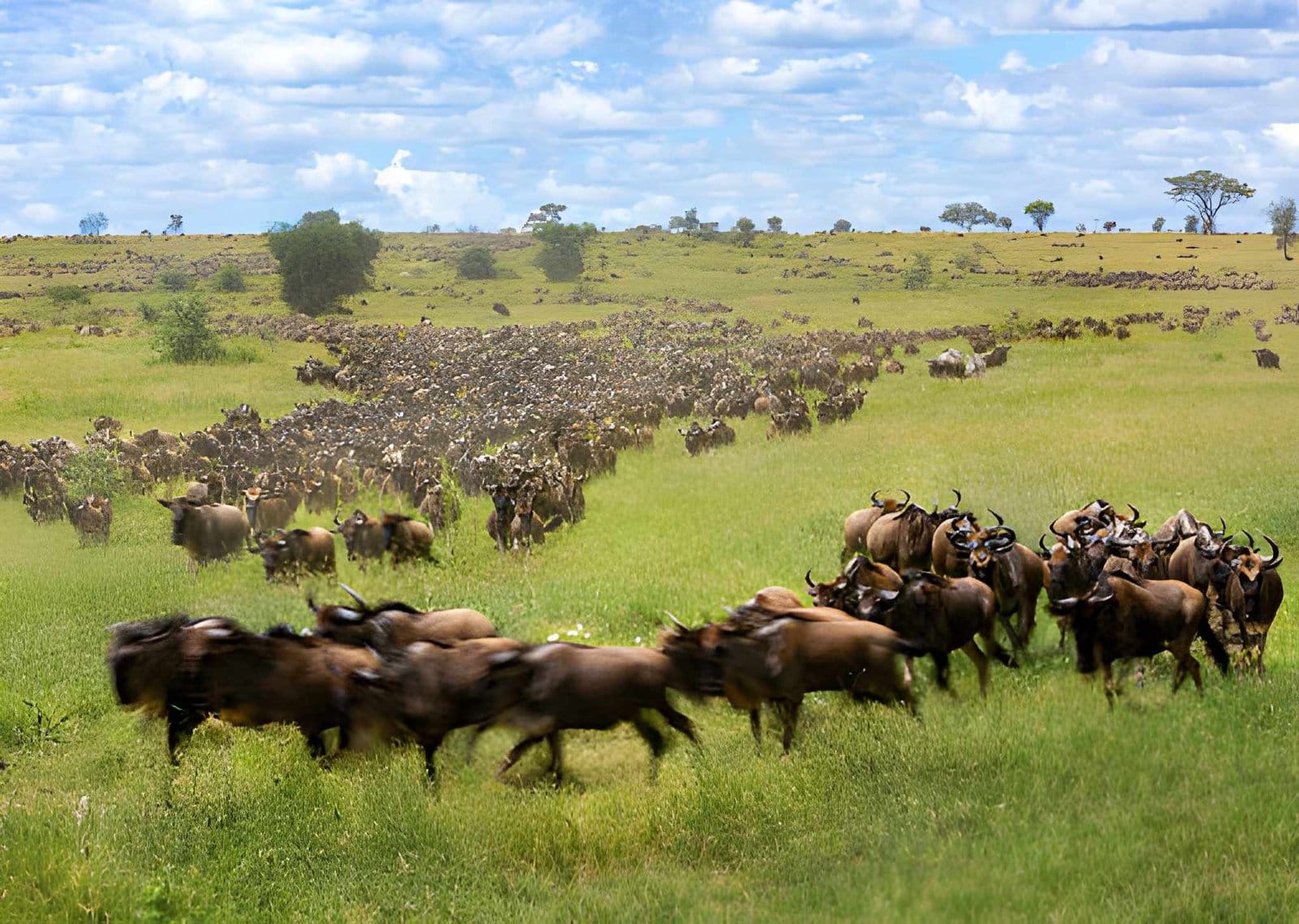
Migration in Motion Safari
- Herds on the move toward the Western Corridor
- Fewer tourists than peak season
- 5 real itinerary options, 4 to 6 days
- Zanzibar fly-in/fly-out combinations
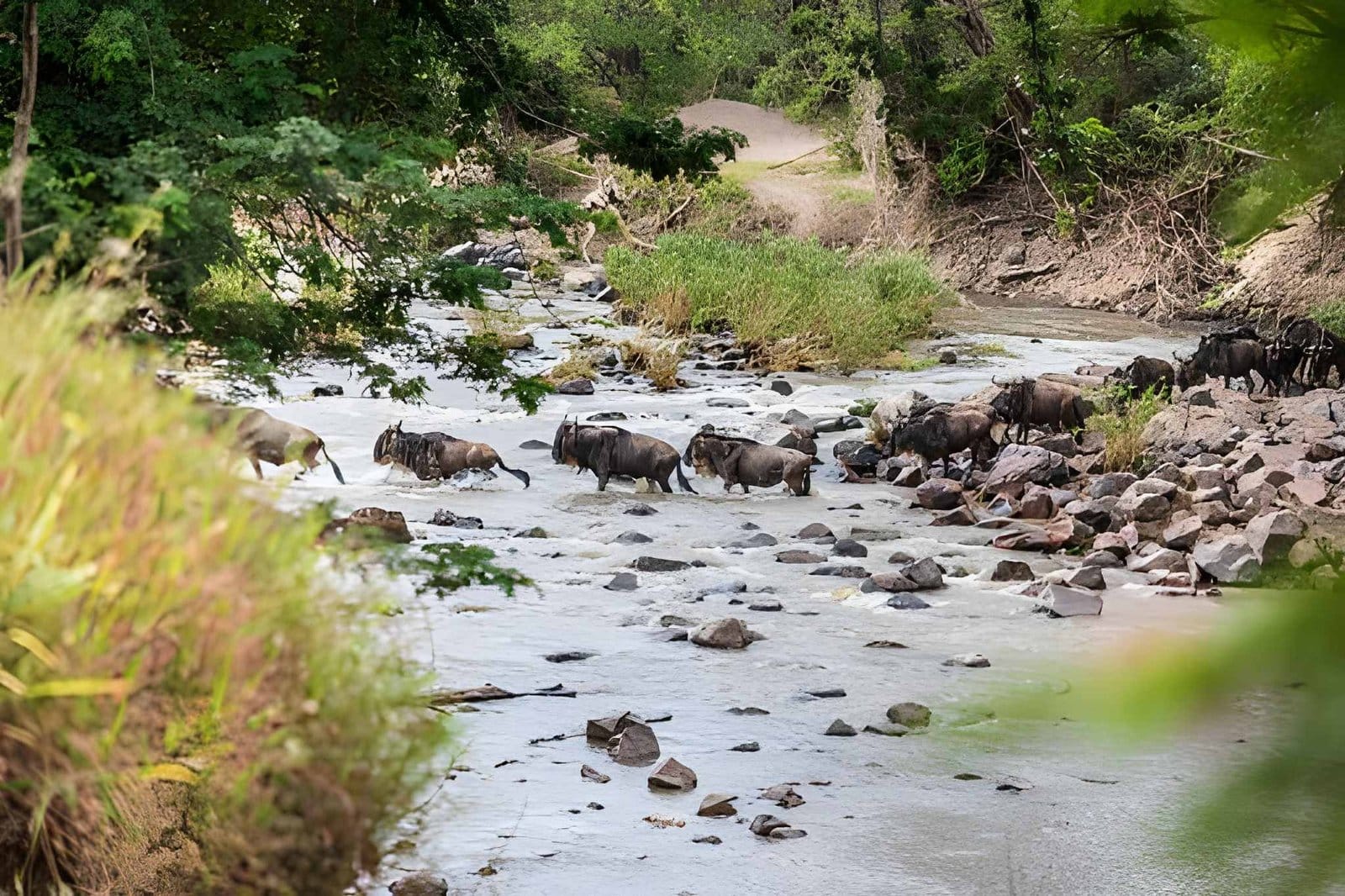
Grumeti River Migration Safari
- The Grumeti River and its resident crocodiles
- Fewer crowds than the Mara River season
- 5 real itinerary options, 4 to 6 days
- No crossing guarantee, honest odds explained
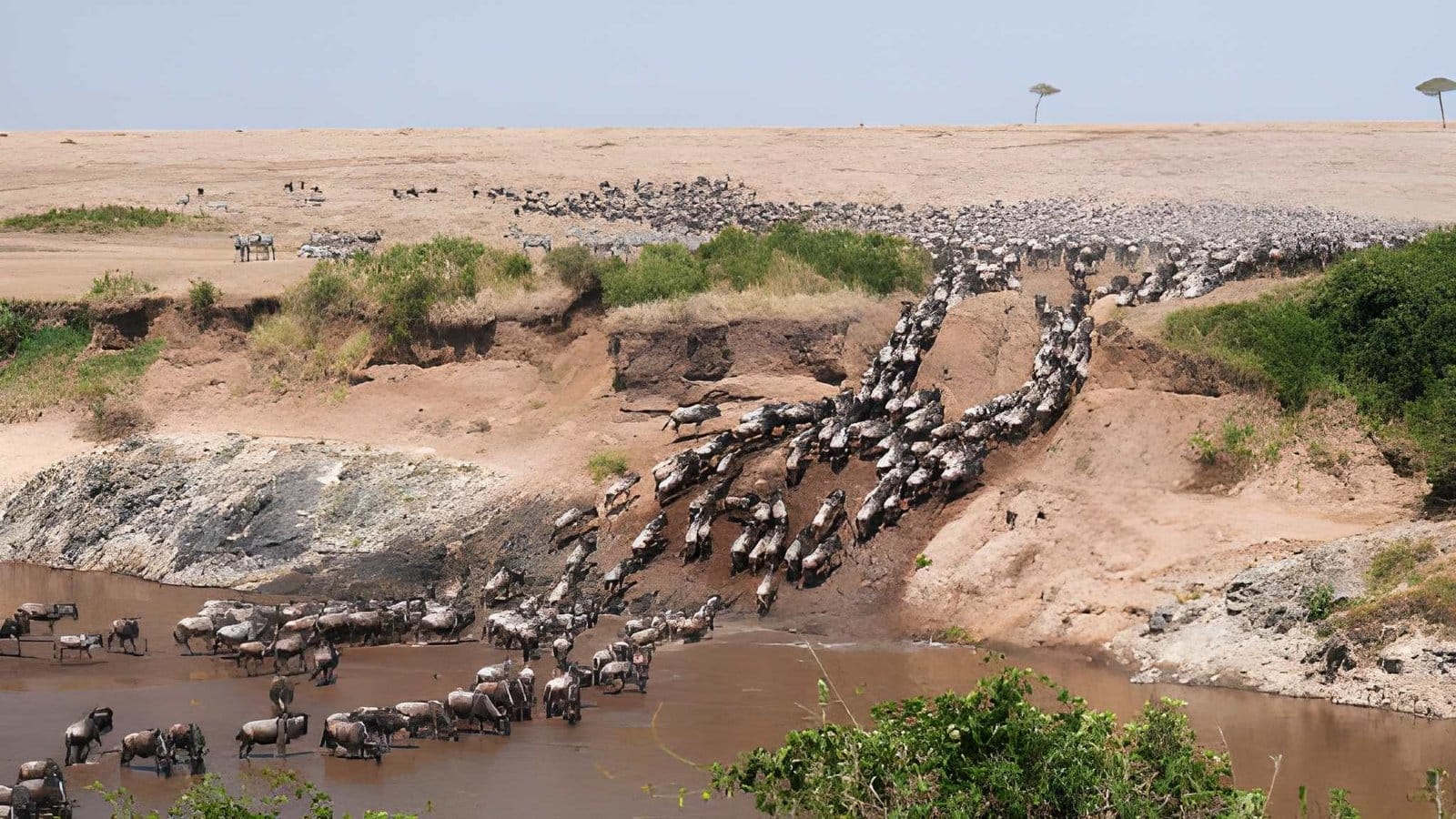
Mara River Crossing Safari
- The iconic Mara River crossing
- Peak migration atmosphere in August
- 5 real itinerary options, 4 to 6 days
- No crossing guarantee, guides track daily conditions
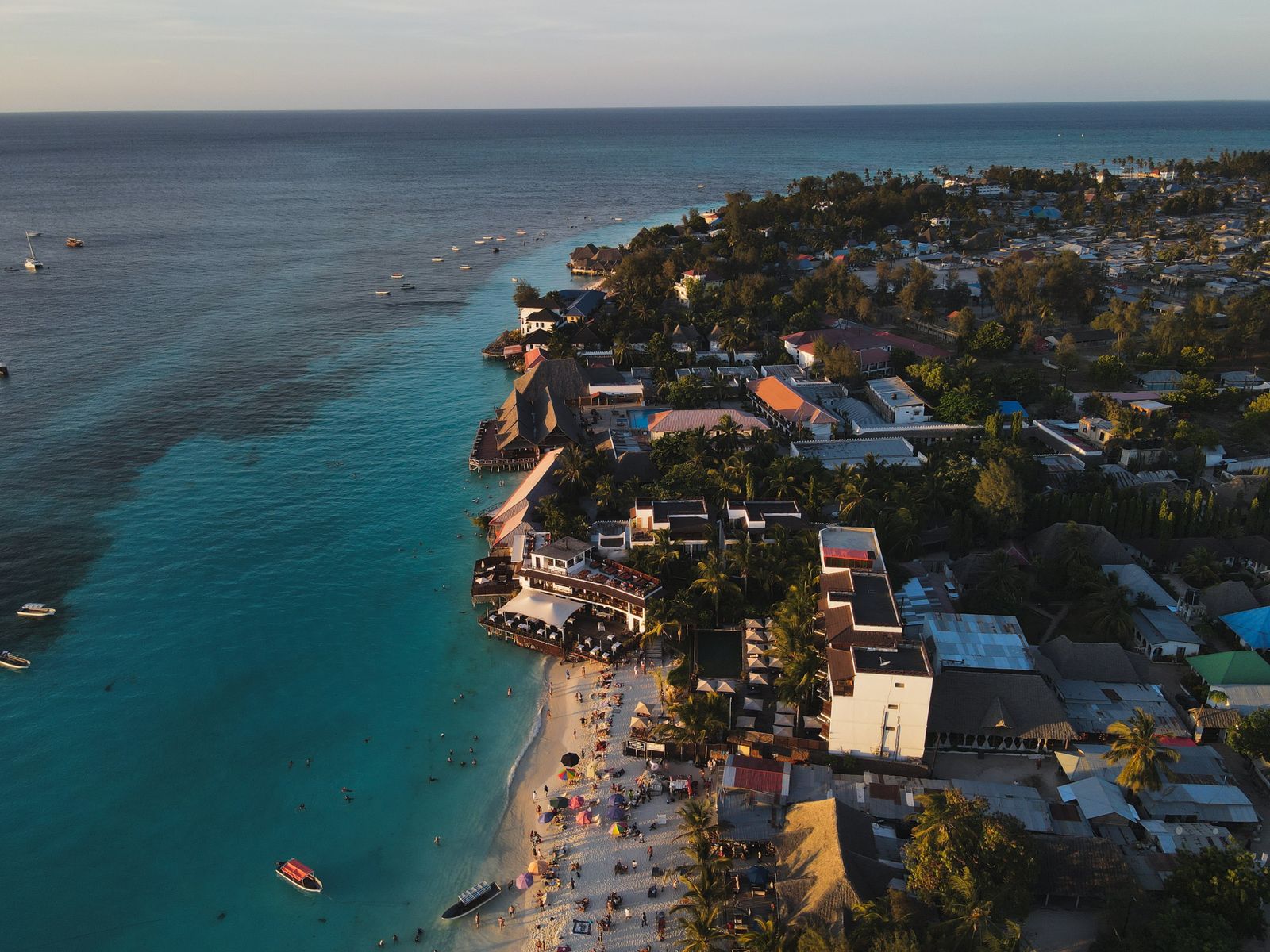
Zanzibar to Serengeti Migration Safari
- Fly direct from the beach into the migration
- Combine Zanzibar's beaches with Northern Serengeti
- 3 real itinerary options, 4 to 6 days
- Ideal for honeymoons and short holidays
Not sure which phase to chase? Contact us and tell us your travel dates. We'll tell you exactly what you'll see.
River Crossings: The Ultimate Expert Guide
The main eventThe river crossings are the most iconic and dramatic moments of the Great Migration. Two rivers provide the stage: the Grumeti River in the Western Corridor and the Mara River in the north.
Grumeti River Crossings: The Western Drama
The Grumeti crossings are the first major water obstacles the herds face. Less famous than the Mara River, but equally dramatic and far less crowded, home to some of the largest crocodiles in Africa.
Best time: late May to early July. Insider secret: the Grumeti crossings are often more chaotic than the Mara. The wildebeest are less experienced, making the crossings wilder.
Mara River Crossings: The World-Famous Spectacle
The Mara River crossings are the most famous wildlife spectacle on Earth. Hundreds of thousands of wildebeest and zebras gather on the riverbanks before plunging into crocodile-infested waters.
Best time: mid-July to late August. Viewing tip: crossings are unpredictable. You may need to wait several hours, most likely in the early morning or late afternoon.
Pro tip: to avoid the crowds at the Mara River, consider the Grumeti River crossings in June: similar drama, a fraction of the tourists, and lower prices.
Calving Season: The Circle of Life
New life on the plainsBetween January and March, the southern Serengeti becomes the stage for one of nature's most remarkable events: the wildebeest calving season. Over 500,000 calves are born in a matter of weeks, with up to 8,000 births per day at the peak.
This is a time of intense predator action: lions, cheetahs, leopards and hyenas follow the herds closely, taking advantage of the abundance of newborn calves.
Calving season fast facts: 500,000+ calves born annually, 8,000+ births per day at peak, best viewing in the Ndutu area, excellent for photography thanks to short grass and soft morning light.
Where to Stay: Migration Accommodation
Rest easyChoosing the right accommodation for the right migration phase matters. Here are honest options across every budget.
Serengeti & Ndutu Public Campsites
$25–$30 per person / night
Seronera, Ndutu, Grumeti
Basic facilities, incredible wildlife sounds, inside the park. Book early. These fill up fast in peak season.
Mid-Range Tented Camps
$150–$250 per person / night
Central & Western Serengeti
En-suite bathrooms, central dining, excellent migration access without the ultra-luxury price tag.
Mobile Camps Following the Herds
$120–$180 per person / night
Moves with the migration
Camps that relocate through the season to stay close to the action: unbeatable wildlife access.
Luxury Lodges on the Crater Rim
$750–$1,300 per person / night
Ngorongoro Crater rim
Stunning views and exceptional service, ideal for pairing a migration safari with the crater.
Booking tip: for peak migration months (July–September), book 6–12 months ahead. The best-located camps sell out first, regardless of budget tier.
Best Time to Visit: A Seasonal Guide
When to goThe best time depends entirely on what you want to see. Each season offers a unique experience.
Migration expert advice: "There's no bad time to see the Migration. Every season offers something unique. Want drama? Visit in August. Want intimacy? Visit in February. Want solitude? Visit in April."
Sample Migration Itineraries
Day by dayA day-by-day look at what our most requested migration packages actually include.
5-Day Calving Season Safari 5 days / 4 nights
Day 1: Arrive Arusha → transfer to Ndutu, afternoon game drive.
Day 2: Full day in Ndutu: calving viewing and predator action.
Day 3: Ndutu → Ngorongoro Crater, full-day descent.
Day 4: Ngorongoro → Central Serengeti, game drive en route.
Day 5: Morning game drive, return to Arusha.
8-Day Mara River Crossings Safari 8 days / 7 nights
Day 1: Arrive Arusha → transfer to Northern Serengeti.
Days 2–4: Full days at the Mara River, waiting for the crossings.
Day 5: Northern → Central Serengeti, game drive.
Day 6: Full day Central Serengeti.
Day 7: Serengeti → Ngorongoro, crater descent.
Day 8: Ngorongoro → Arusha, departure.
Local Tips: From Guides Who Track the Herds
From our own guidesInsider tips from our migration specialists, things you won't find in a guidebook.
1. The waiting game
for river crossings, be prepared to wait. The herds can take hours to decide to cross. Bring snacks, water and patience — the payoff is worth it.
2. Crossing prediction
experienced guides can predict crossings by watching the wildebeest gather and pace on the riverbank. The tension is palpable before a crossing.
3. Camp selection matters
for calving season stay in Ndutu, for Grumeti crossings stay in the Western Corridor, for Mara crossings stay in Northern Serengeti. Choosing the right base saves hours of driving daily.
4. Book early — really early
for peak migration season (July–September), book accommodation 6–12 months in advance. The best-located camps sell out over a year ahead.
5. Follow the predators
the migration is not just about the wildebeest. Lions, cheetahs and leopards follow the herds, and following them often leads to the most dramatic moments.
6. Golden hour photography
the best light for crossings is at sunrise and sunset. The warm light makes the drama even more powerful.
7. Shoulder season value
October–December and February are excellent value, with smaller crowds and lower prices while wildlife viewing remains exceptional.
8. Travel insurance is essential
medical evacuation from the Serengeti is expensive but necessary. Make sure your policy covers safari activities.
Frequently Asked Questions
Your questions, answeredIt depends on what you want to see: calving in January–February, Grumeti crossings in June–July, Mara crossings in July–September, and the return south in October–December.
The Mara River crossings in northern Serengeti (July–September) are the most famous, while the Grumeti River crossings (June–July) are also spectacular with far fewer crowds.
From $150–$300 per person per day for budget camping, $300–$600 for mid-range, and $800+ for luxury lodges and mobile camps.
Yes. The green season (March–May) offers lush landscapes, fewer crowds and lower prices, with the herds spreading out across the Western Corridor.
For peak season (July–September), book 6–12 months ahead. For calving season and shoulder months, 3–4 months is usually enough.
The migration follows the rains, but exact timing can vary by a few weeks each year. Local guides track real-time conditions to predict movements.
Yes, most migration safaris are family-friendly, and several partner lodges offer family suites and activities for children.
The Grumeti crossings (June–July) are less crowded with large crocodiles. The Mara crossings (July–September) are more famous, larger in scale, and busier.
Book Your Migration Safari
Let's make it happenTell us your travel dates and our migration specialist will reply within 24 hours with exactly what you'll see and an exact price.
Ready to Witness the Greatest Wildlife Spectacle?
Get a free, no-obligation quote from a local Arusha operator who tracks the herds year-round.