
A small park with an outsized range of scenery
Arusha National Park is the most convenient park in Tanzania, 40 minutes from Arusha town and often visited as a half-day trip or the acclimatisation day before a Kilimanjaro or Meru climb. Despite its size, it covers four distinct landscapes in one visit: the Ngurdoto Crater, the Momella lakes, montane forest, and the lower slopes of Mount Meru itself.
It is also one of only three parks in Tanzania where walking safaris are permitted, and the only place near Arusha where you can canoe among hippos and flamingos on the Momella lakes.
Most visitors combine it with a half-day itinerary, though it also serves as the acclimatisation trek before climbing Mount Meru, whose summit lies inside the park boundary.
What to see
Arusha packs an unusual range of terrain into a small area. Plan your route around these three zones.
Ngurdoto Crater
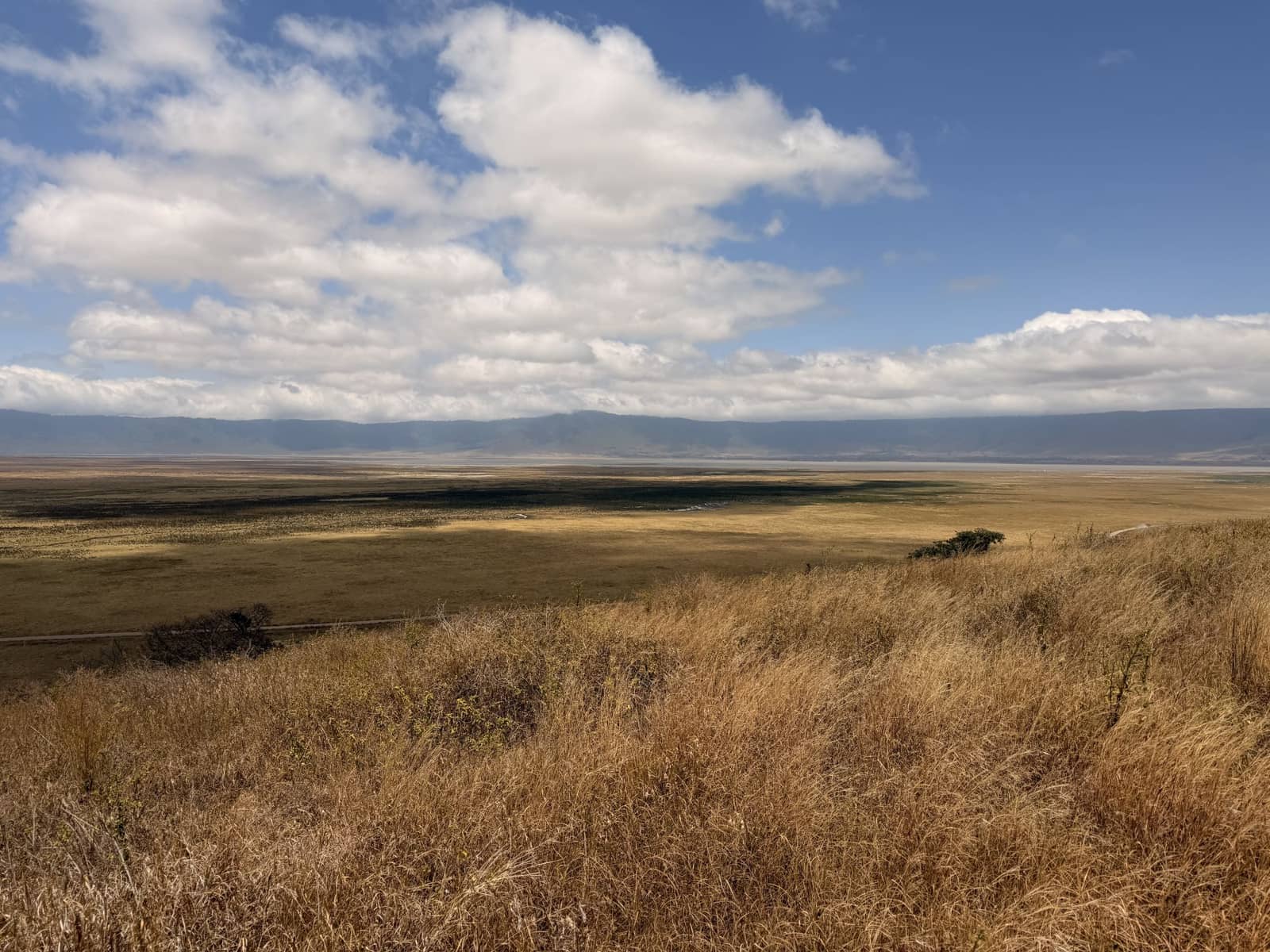
A lush, swampy crater floor ringed by forest, often called "Little Ngorongoro". Vehicles cannot descend into it, so viewing is from the rim, looking down on buffalo, warthog and waterbuck grazing below.
Momella Lakes
A chain of shallow alkaline lakes, each a different shade of green or blue depending on its algae and mineral content. Flamingos, giraffe and buffalo gather at the shorelines, and this is where canoe safaris launch.
Mount Meru
Africa's fifth-highest peak at 4,566m, and the dramatic backdrop to most of the park. Climbable in 3–4 days, with far fewer trekkers than Kilimanjaro and superb views of Kilimanjaro itself on a clear day.
Walking safaris
Arusha is one of only three parks in Tanzania where walking safaris are permitted. Most northern-circuit parks require you to stay in the vehicle.
Guided walks with an armed ranger let you get close to giraffe, zebra and buffalo on foot, reading tracks and dung, and hearing the bush at ground level rather than through a windscreen.
Because large predators are largely absent, walking here is safer than in the bigger parks. Dangerous encounters are almost always with buffalo, which the ranger is trained to manage from a safe distance.
Wildlife
Arusha has no lion and very little of the classic "big game" of the Serengeti. Its wildlife draw is different: primates, birds and forest species you will not see on a savannah safari.
The park's real specialty is its troops of black-and-white colobus monkeys, easily seen in the montane forest, along with over 400 recorded bird species around the Momella lakes alone.
Elephant sightings do happen but are occasional rather than reliable. This is not the park to choose if the Big Five is your priority, but it rewards visitors interested in scenery, birds and a quieter pace.
When to go
Arusha is a year-round park: its low altitude and proximity to town mean it rarely closes, unlike higher-altitude treks.
June to October (dry season) gives the clearest views of Mount Meru and Kilimanjaro, and the easiest walking conditions.
The wetter months (March–May) turn the crater and lake edges a vivid green and bring more birdlife, though tracks can be muddy and the mountain views less reliable.
Accommodation
Most visitors base themselves in Arusha town and visit as a day trip, but a few properties sit close to the park gate for those climbing Meru or combining it with another park.
Arusha town
Budget – Luxury
The most common choice: 30–40 minutes from the park gate, with the widest range of hotels and easy onward transfers to Kilimanjaro Airport or the northern circuit.
Lodges near the gate
Mid-range – Luxury
A handful of lodges sit within a short drive of the park entrance, useful for an early start on a Meru climb or a walking safari at dawn.
Meru mountain huts
Included in trek package
Climbers overnight in a series of mountain huts on the ascent, Miriakamba and Saddle Hut, included as part of any Mount Meru trekking package.
We can arrange accommodation at any tier as part of a day trip or Meru trekking package. Ask us for current availability.
Park entrance fees
Fees are per person per 24-hour period and include 18% VAT. Paid by card or pre-loaded park card. Cash is not accepted at the gate.
| Category | Adult | Child (5–15) |
|---|---|---|
| Park entrance | $59.00 | $11.80 |
| Meru trekking concession | $59.00 | $11.80 |
| Campsite fee | $35.40 | $5.90 |
When you travel with us, all park fees are calculated and included in your quoted price, with no separate payment needed at the gate.
What you will see


Common questions
Yes, it is the most common way to visit, usually combined with a morning departure from Arusha town and return by early afternoon.
No. Arusha has no lion and rhino, and elephant sightings are occasional. It is chosen for scenery, walking safaris, colobus monkeys and birdlife rather than the Big Five.
Yes, relatively. The absence of lion makes Arusha one of the safer parks for walking, though buffalo still require caution and an armed ranger always accompanies walking groups.
Yes, Meru is a standalone trek and a popular choice in its own right. Many climbers prefer it for its quieter trails and dramatic crater rim walk.
Meru is shorter (3–4 days vs 5–9), steeper in places, and far less crowded. It is also commonly used as acclimatisation practice before a Kilimanjaro attempt.
Yes, its proximity to town makes it an easy add-on to a Tarangire or Ngorongoro itinerary, or a relaxed first/last day of a longer safari.
Yes, on the Momella lakes: a gentle way to see hippos, flamingos and waterbirds from the water, usually combined with a walking or driving portion of the visit.
Yes for walking safaris and the Meru trek (an armed ranger is compulsory), and strongly recommended for game drives given the limited signage inside the park.