
Packing in short
The essentials, before the full list.
The one rule?
Layers. 14 °C at dawn, 28 °C at midday.
Baggage limit?
15 kg soft bag on internal flights. Strictly enforced.
What colours?
Khaki and olive. Avoid blue and black: tsetse flies.
Most forgotten item?
Binoculars. More useful than a long lens.
What is banned?
Camouflage clothing and single-use plastic bags.
How many clothes?
Four days' worth. Laundry is available almost everywhere.
The one rule that matters
Dress in layers. A safari day starts at around 14 °C (5 °C on the Ngorongoro rim) and reaches 28 °C by midday, and you will experience both from an open vehicle. One warm coat is the wrong answer; a base layer, a fleece and a windproof shell is the right one.
The second rule, if you have internal flights: 15 kg in a soft bag. Light aircraft in Tanzania enforce this strictly, and hard-shell suitcases are refused because they do not fit the hold. Most lodges offer same-day laundry, so packing for four days rather than ten is almost always the right call.
Clothing
Colours matter more than you think
Wear khaki, olive, beige and brown. There are three specific things to avoid:
Medical kit and toiletries
Photography and optics
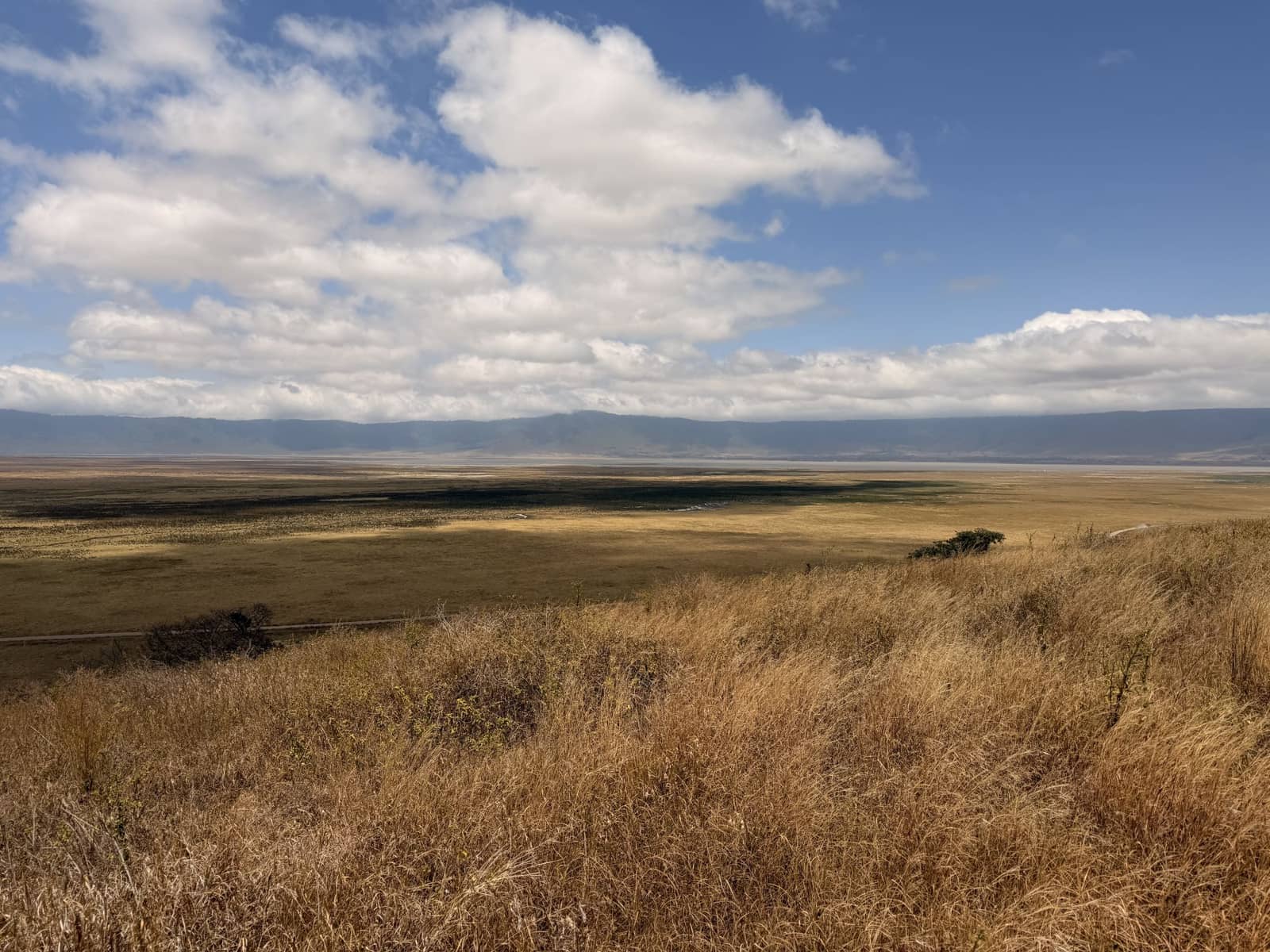
Binoculars are the single most under-packed item. Many sightings, particularly rhino in the crater, are simply too distant for a camera. Bring a 300 mm lens or longer if you are serious about wildlife photographs, but a wide-angle lens too: baobabs, the crater, the plains at dawn. You will regret only bringing a telephoto. Camps often run generators for limited hours only, so bring spare batteries and more memory cards than you think. A dust-proof bag matters: dry-season dust gets into everything, and changing lenses in a moving vehicle is how sensors get ruined. A bean bag or substitute is useful for steadying long lenses on the roof hatch.
Documents and money
What to leave at home
Safari packing: frequently asked questions
Layers in neutral colours: khaki, olive, beige, brown. Mornings are around 14 °C and afternoons near 28 °C, and you will experience both from an open vehicle. Avoid blue and black, which attract tsetse flies.
Tsetse flies are attracted to those colours, and they are present in Tarangire and the miombo woodland of the southern parks. The bite is painful, though there is no sleeping sickness risk in the main tourist areas.
No. Camouflage is reserved for the military in Tanzania and is illegal for civilians. Wearing it can cause genuine problems at checkpoints, so leave it at home.
15 kg in a soft bag, strictly enforced on light aircraft. Hard-shell suitcases are refused because they do not fit the hold. If you have a larger bag, most Arusha hotels will store it while you fly.
No. Comfortable closed shoes are enough for a game-drive safari, since you spend most of your time in a vehicle. Proper boots are only needed for Kilimanjaro, Mount Meru or serious walking safaris.
The Ngorongoro rim drops to around 5 °C before dawn and the Serengeti to 13–15 °C. In an open vehicle moving at 30 km/h it feels considerably colder. A fleece and a windproof layer are not optional.
Yes, and they are the most commonly forgotten item. Many sightings, rhino in the Ngorongoro Crater above all, are too distant for a camera lens but perfect through binoculars.
A 300 mm lens or longer for wildlife, plus a wide-angle for landscapes. Bring spare batteries, since camps often run generators only at set hours, and a dust-proof bag, since dry-season dust destroys sensors.
Yes, at almost every lodge and camp, usually same-day. This is why packing for four days rather than ten is nearly always the right decision, particularly with a 15 kg flight limit.
US dollars in cash for tips and extras, in notes issued after 2009. Older notes are refused throughout Tanzania. Bring small denominations for tipping. Cards work at lodges but connectivity is unreliable.
Yes, since 2019, and it is enforced at the airport where they are confiscated on arrival. Bring fabric or mesh bags instead. Ziplock bags for toiletries are generally tolerated but the safest approach is to avoid all of them.
Yes, type G, the British three-pin standard. Voltage is 230V. Bring a multi-socket adapter if you have several devices, because camps often have only one or two sockets per tent.
Only with written permission from TANAPA, which is rarely granted for tourism. Flying without it risks confiscation and a fine. Assume the answer is no unless you have paperwork in hand.