
The Big Five in short
Honest odds, before the detail.
Which are easy?
Lion, elephant and buffalo: near-certain.
Leopard?
55–60% in the Seronera valley over three days.
Black rhino?
~60% on a full day in the Ngorongoro Crater. Nowhere else.
How many days?
Four to five for a realistic chance at all five.
What should I bring?
Binoculars matter more than a long lens for rhino.
Guaranteed?
Never. Anyone promising all five is overselling.
What the Big Five are, and why
Lion, leopard, elephant, buffalo and black rhino. The term has nothing to do with size. The hippo and giraffe are both larger than a leopard. It comes from colonial-era big-game hunting, and referred to the five animals considered most dangerous to hunt on foot.
The name has outlived its origin and is now the standard checklist of a safari, which is slightly absurd but genuinely useful: between them the five cover most of the habitats and behaviours worth travelling to see.
The honest position on completing the set: four of the five are straightforward on a well-planned northern circuit safari. The black rhino is the difficulty, and everything below is really about how to solve that one.
Where to see each one
Lion
The easiest. The Serengeti holds around 3,000 and has one of the highest densities in Africa; the Ngorongoro Crater has roughly 60 in 260 km², so they are almost unavoidable. Ruaha in the south has prides of twenty or more that hunt buffalo and even young elephant.
Best odds: 90–95% on a three-day northern circuit safari.
Elephant
Tarangire in the dry season is the best on the northern circuit: 2,500 to 3,000 resident animals, with herds of fifty or more along the river. Ruaha has around 12,000, the largest population in East Africa.
Best odds: 95%+ in Tarangire July to October.
Buffalo
Common everywhere, usually in large herds. The Ngorongoro Crater and Serengeti both hold thousands. Old solitary bulls, known as dagga boys, are the ones to treat with respect.
Best odds: 90%+ anywhere.
Leopard
The elusive one, but far from impossible. The Seronera valley in the central Serengeti is the single best place in Tanzania: leopards rest in the acacias along the river through the heat of the day. Ndutu is also excellent.
Best odds: 55–60% over three days in the central Serengeti.
Black rhino
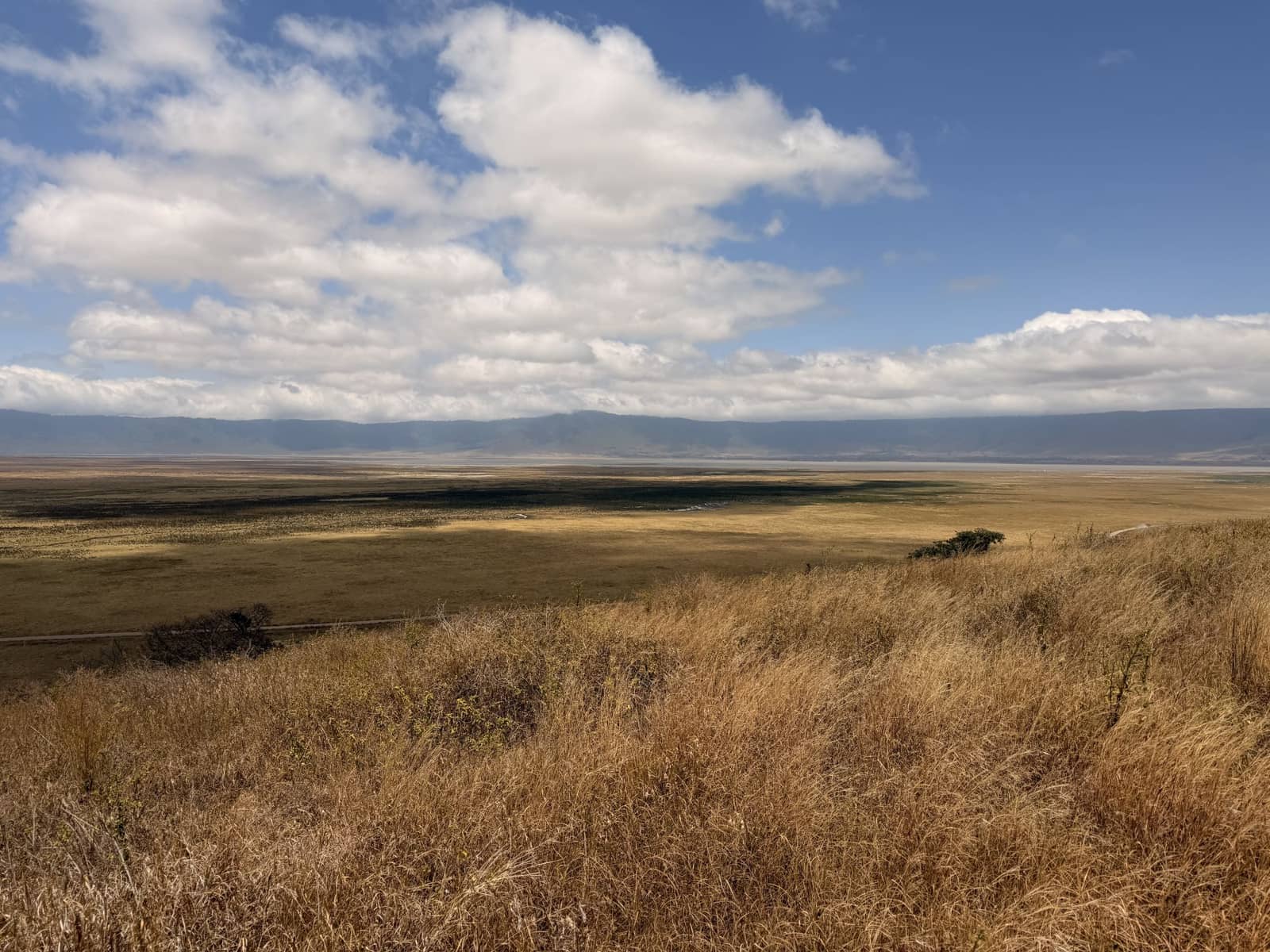
The hard one. Tanzania's population is small and scattered, and there is one place where you have a genuine chance: the Ngorongoro Crater, where around 30 live under 24-hour armed protection. A handful survive around the Moru Kopjes in the Serengeti, but sightings there are rare.
Expect to see them at a distance across open grass rather than close to the vehicle. A good pair of binoculars matters more here than a long lens, and early morning is when they are most likely to be out in the open.
Best odds: around 60% on a full day in the crater.
Itineraries that give you the best chance
| Trip | Parks | Realistic outcome |
|---|---|---|
| 2 days | Tarangire + Ngorongoro | Lion, elephant, buffalo near-certain; rhino likely; leopard unlikely. 3–4 of 5. |
| 4 days | Tarangire, Serengeti, Ngorongoro | All four easy species, plus a real chance at both leopard and rhino. 4–5 of 5. |
| 6 days | Full northern circuit | Time to work the Seronera valley for leopard and a full crater day for rhino. Best chance of all five. |
The animals worth more than the checklist
Ask a guide what they would rather show you, and the Big Five rarely tops the list.
Our advice: use the Big Five to shape the itinerary, then forget the checklist once you are out there. The best safari mornings are almost never the ones spent ticking boxes.
The Big Five: frequently asked questions
Lion, leopard, elephant, buffalo and black rhino. The term comes from colonial big-game hunting and referred to the five animals considered most dangerous to hunt on foot, not the largest.
Yes, and a four to five day northern circuit safari gives a realistic chance of all five. Lion, elephant and buffalo are near-certain, leopard is around 55–60% in the Serengeti, and rhino around 60% on a full day in the Ngorongoro Crater.
The Ngorongoro Crater, where around 30 live under 24-hour armed protection. It is the only realistic option in Tanzania. Expect distant sightings across open grass. Bring binoculars.
The Seronera valley in the central Serengeti. Leopards rest in the acacias along the river through the heat of the day, which makes them findable if you know where to look. Ndutu is also excellent.
Ruaha with around 12,000, the largest population in East Africa. On the northern circuit, Tarangire is best: 2,500 to 3,000 resident animals and dry-season herds of fifty or more.
Four to five realistically. Two days covers three or four of them. Six days gives the best chance, because you have time to work the Seronera valley for leopard and a full crater day for rhino.
Four of them, easily. Black rhino is the exception: a handful survive near the Moru Kopjes but sightings are rare. To complete the set, add the Ngorongoro Crater.
No, and be wary of anyone who says otherwise. These are wild animals in areas of thousands of square kilometres. A good operator improves your odds by being in the right place at the right time, and is honest about what those odds are.
Poaching. Tanzania's black rhino population fell from thousands in the 1970s to a few dozen by the 1990s. Numbers are slowly recovering under intensive protection, but they remain critically endangered.
Mouth shape, mainly. Black rhino have a hooked lip for browsing on shrubs; white rhino have a wide flat lip for grazing grass. Tanzania has black rhino; white rhino are found mainly in southern Africa.
Ask a guide and most will say a cheetah hunt, a wild dog pack, or the migration itself. The Big Five is a useful planning framework and a poor description of what makes a safari memorable.
The open southern plains of the Serengeti, particularly around Ndutu during the calving season. Cheetah need open ground to run and avoid areas with high lion density, since lions kill them.
Yes. Old solitary bulls, dagga boys, are responsible for more attacks on people than most other African animals. From a vehicle you are entirely safe; on foot, they are the reason walking safaris carry an armed ranger.
A 300 mm lens or longer helps considerably, particularly for rhino and leopard. But binoculars matter more than most people expect. Many sightings, especially rhino in the crater, are too distant for any realistic lens.